Examples
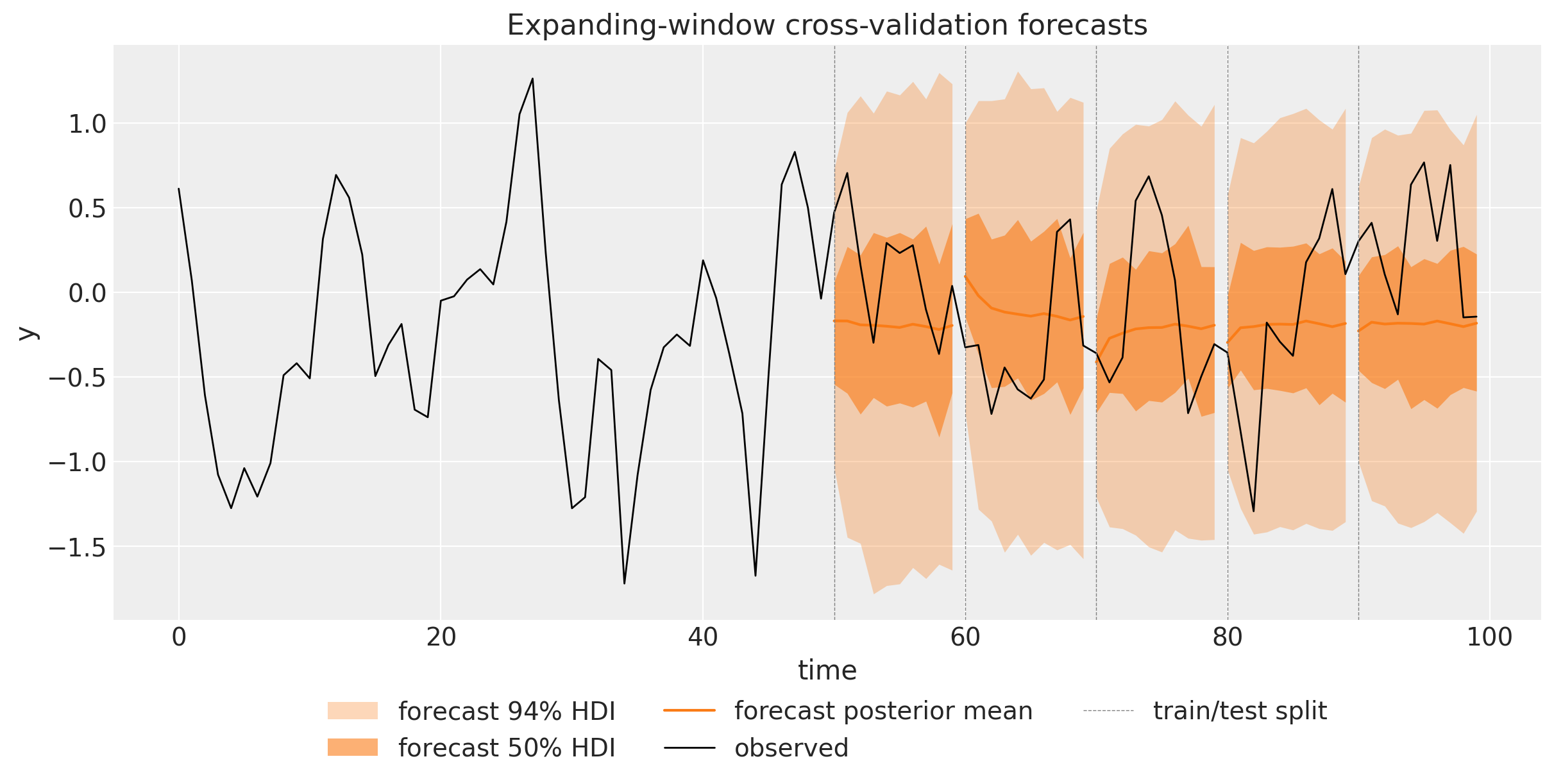
ARMA(1,1) Model
Simulate an ARMA(1,1) process, recover its parameters with NUTS, and evaluate the forecasts with expanding-window cross-validation.
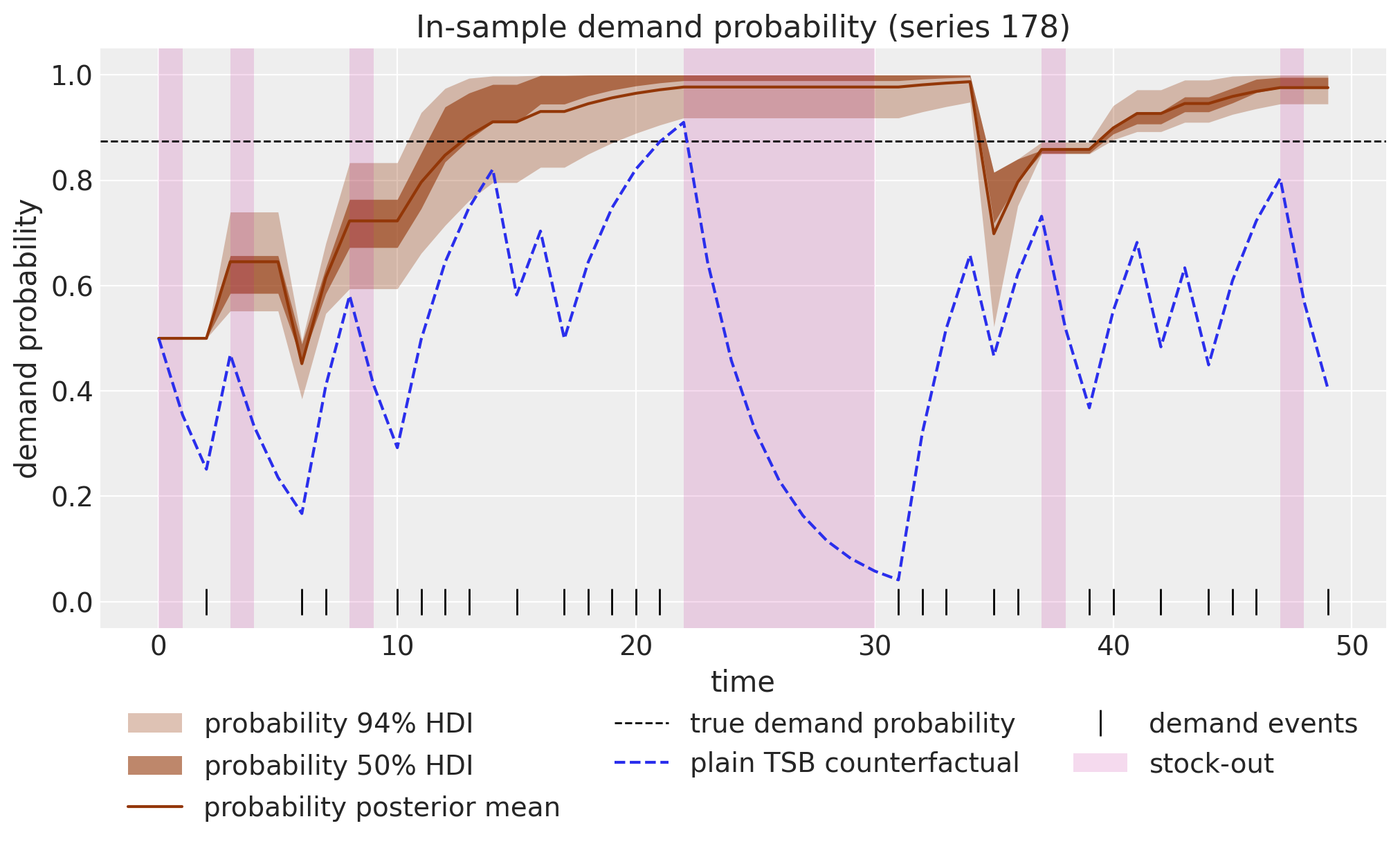
TSB with Availability Constraints for Intermittent Demand
Availability-aware TSB method for intermittent demand. Gating the demand-probability update with a stock availability mask separates true demand from stock-outs, with SVI on a 1,000-series panel and full-availability scenario forecasts.
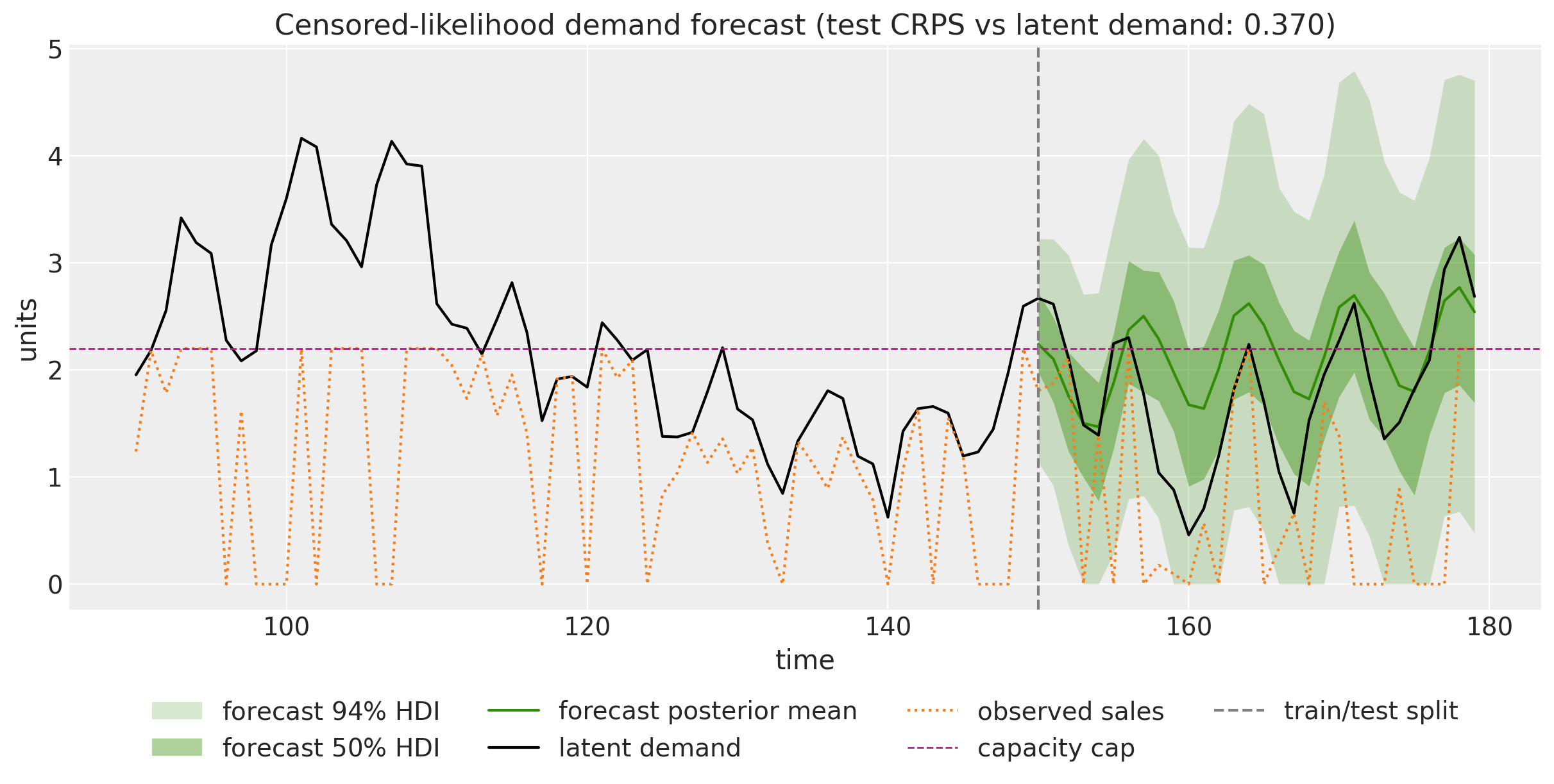
Demand Forecasting with Censored Likelihood
Demand forecasting when observed sales are censored by stockouts and a capacity cap. An AR(2) model with weekly seasonality whose likelihood mixes the Normal density below the cap with the survival mass at it, fit with NUTS and compared against a naive Normal model on recovering true demand.
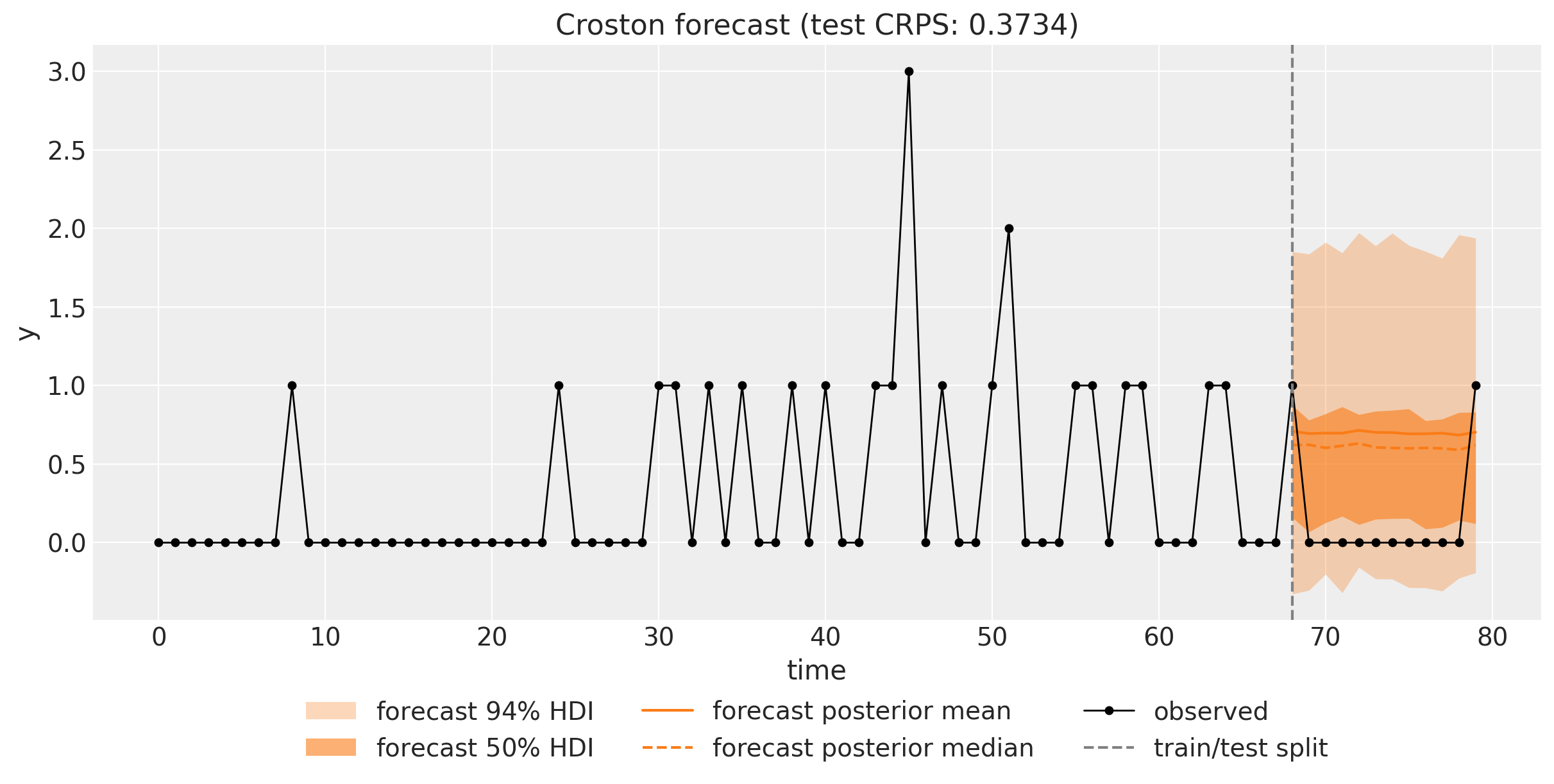
Croston’s Method for Intermittent Demand
Bayesian Croston method for intermittent demand, with masked exponential smoothing of demand sizes and intervals, NUTS inference, and one-step-ahead cross-validation.
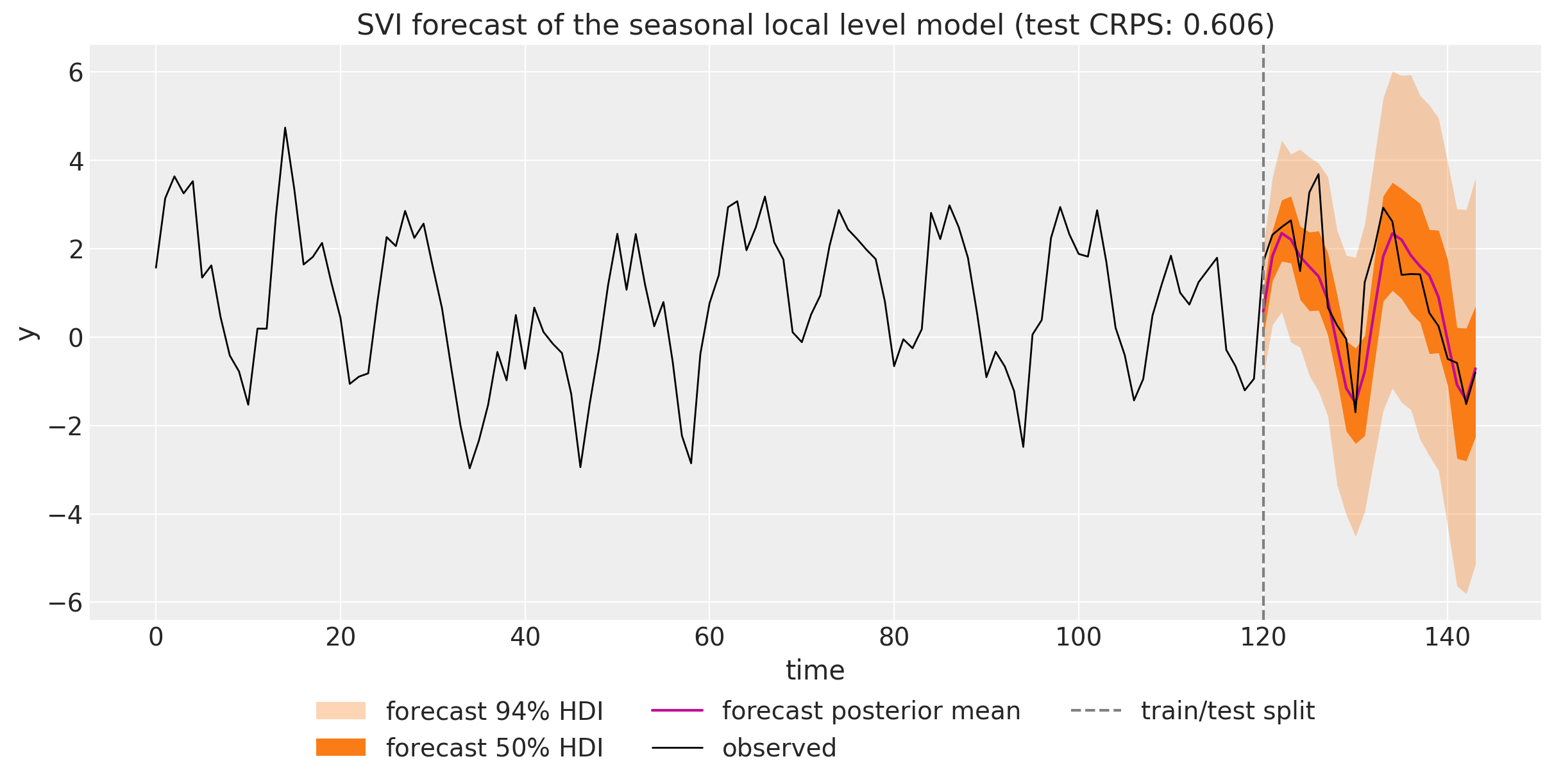
State Space Models with
dynestyx and numpyro_forecast
Write a dynestyx state space model as a plain numpyro_forecast model, choose the inference strategy with a dynestyx handler (Kalman smoother or explicit latent path), and reuse the forecasting, in-sample and backtesting workflow of the package unchanged.
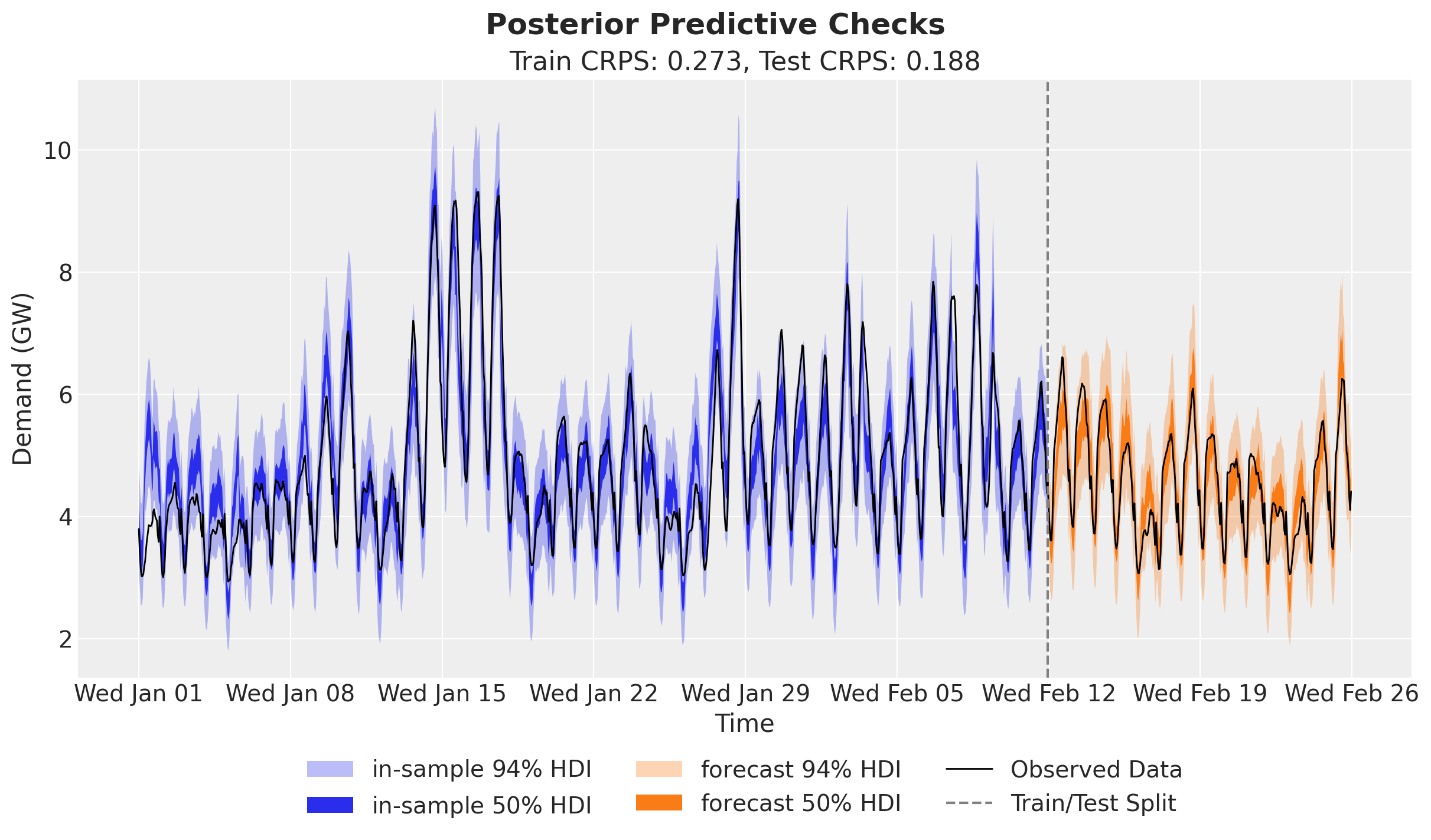
Electricity demand forecasting
Forecast hourly electricity demand in Victoria, Australia with a varying-coefficient temperature effect built from a Hilbert space Gaussian process, hour-of-day and day-of-week seasonality, and a Student-t likelihood fit with SVI.
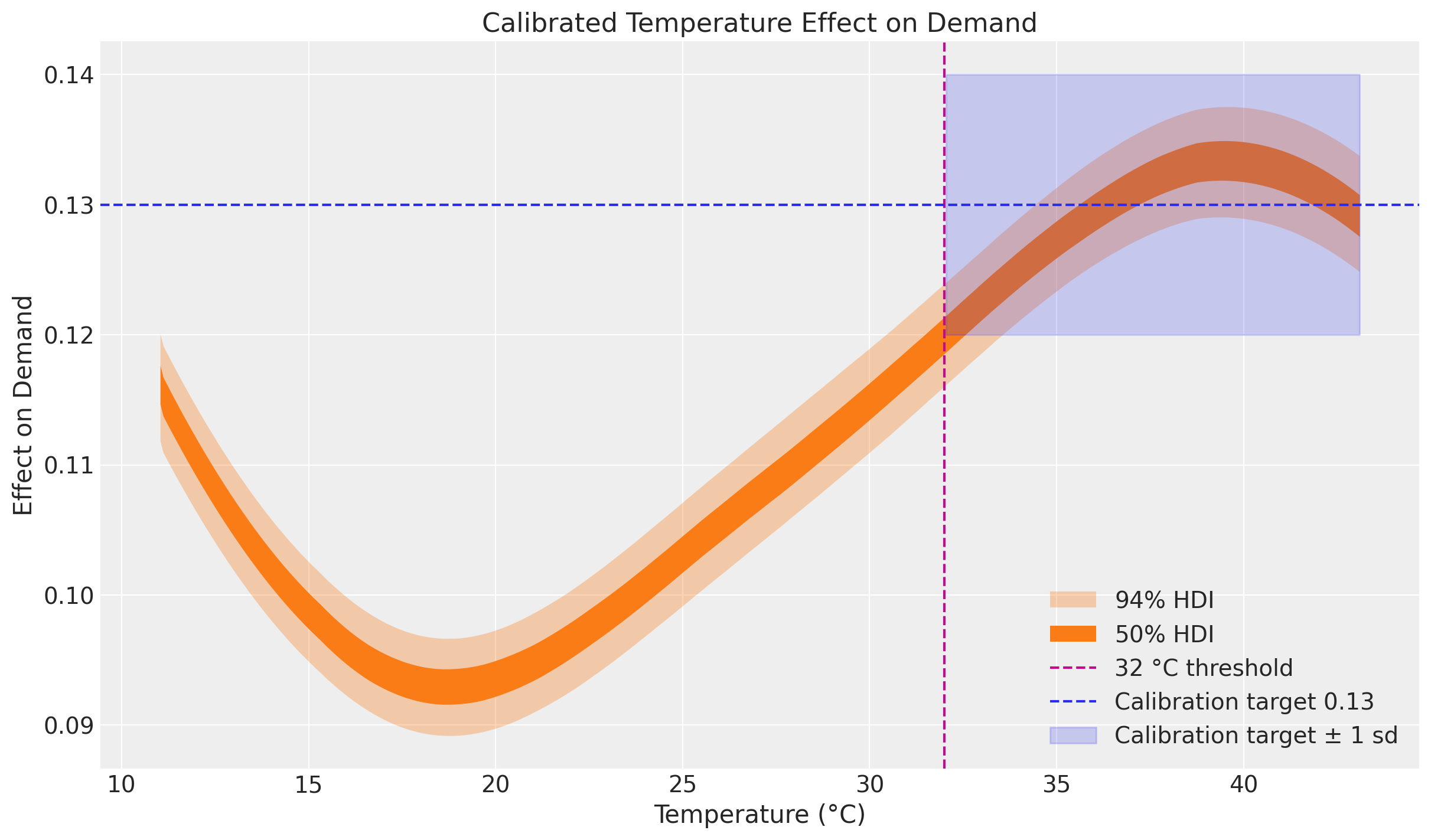
Electricity demand forecasting: prior calibration
Calibrate the priors of the electricity demand model against domain knowledge about the temperature effect, iterating with prior predictive checks before refitting.
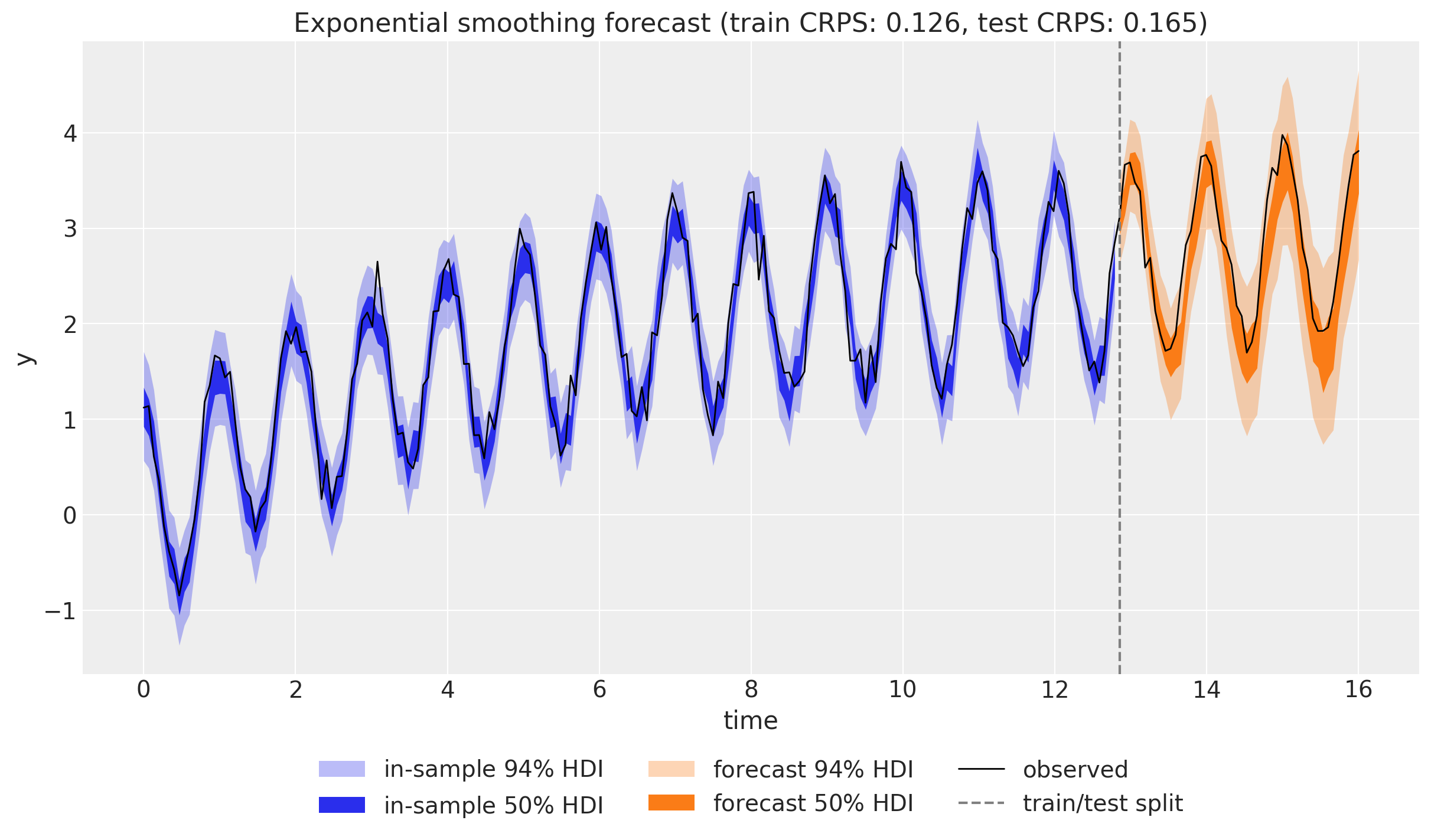
Exponential Smoothing in State Space Form
Write seasonal damped-trend exponential smoothing in innovations state space form so forecast uncertainty is propagated correctly, and fit it with Hamiltonian Monte Carlo.
Univariate forecasting
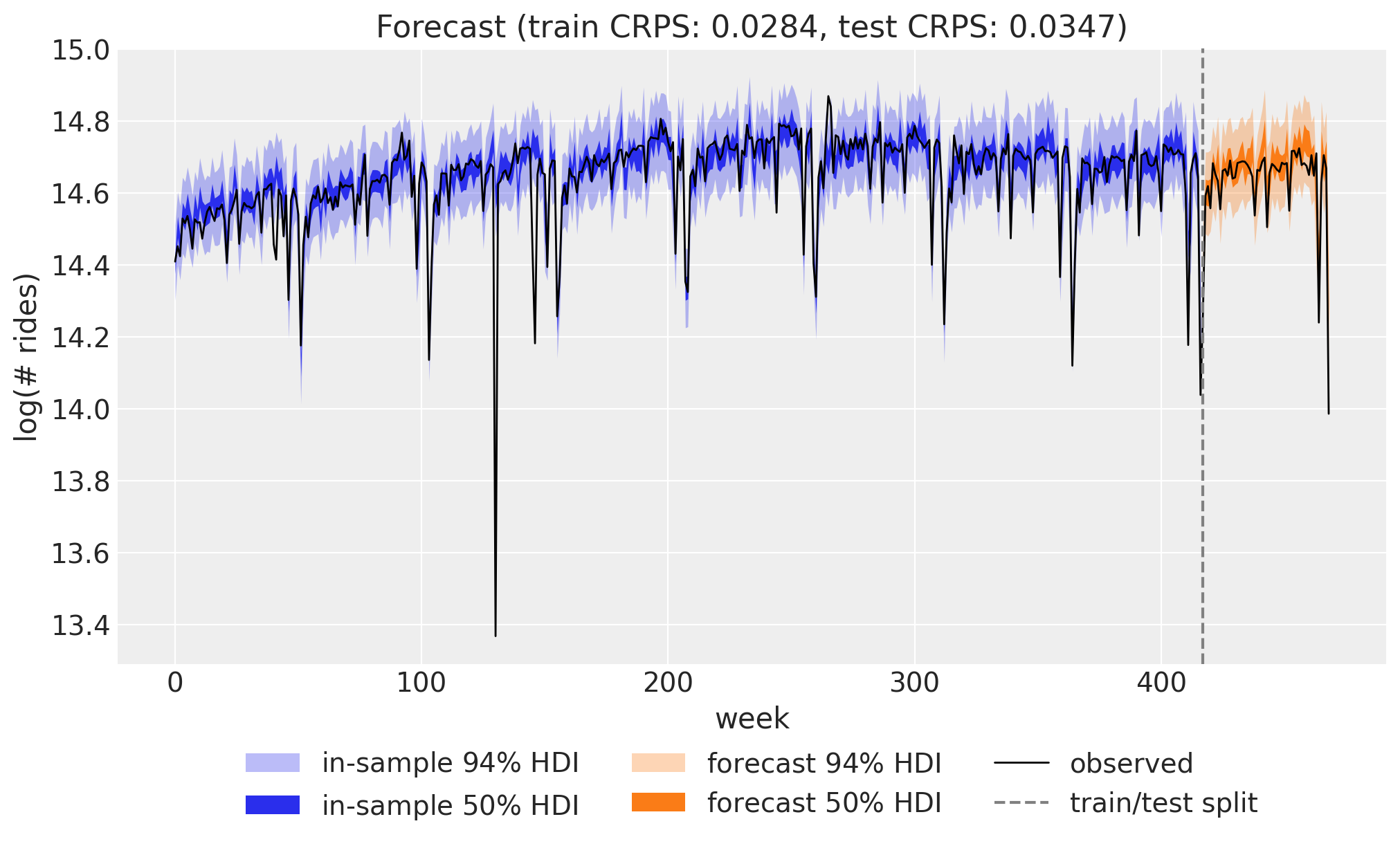
Forecast weekly BART ridership with a random-walk local level, Fourier seasonality, and a Student-t likelihood fit with SVI, then evaluate the model with rolling-origin backtesting.
Forecasting retail demand under stockouts
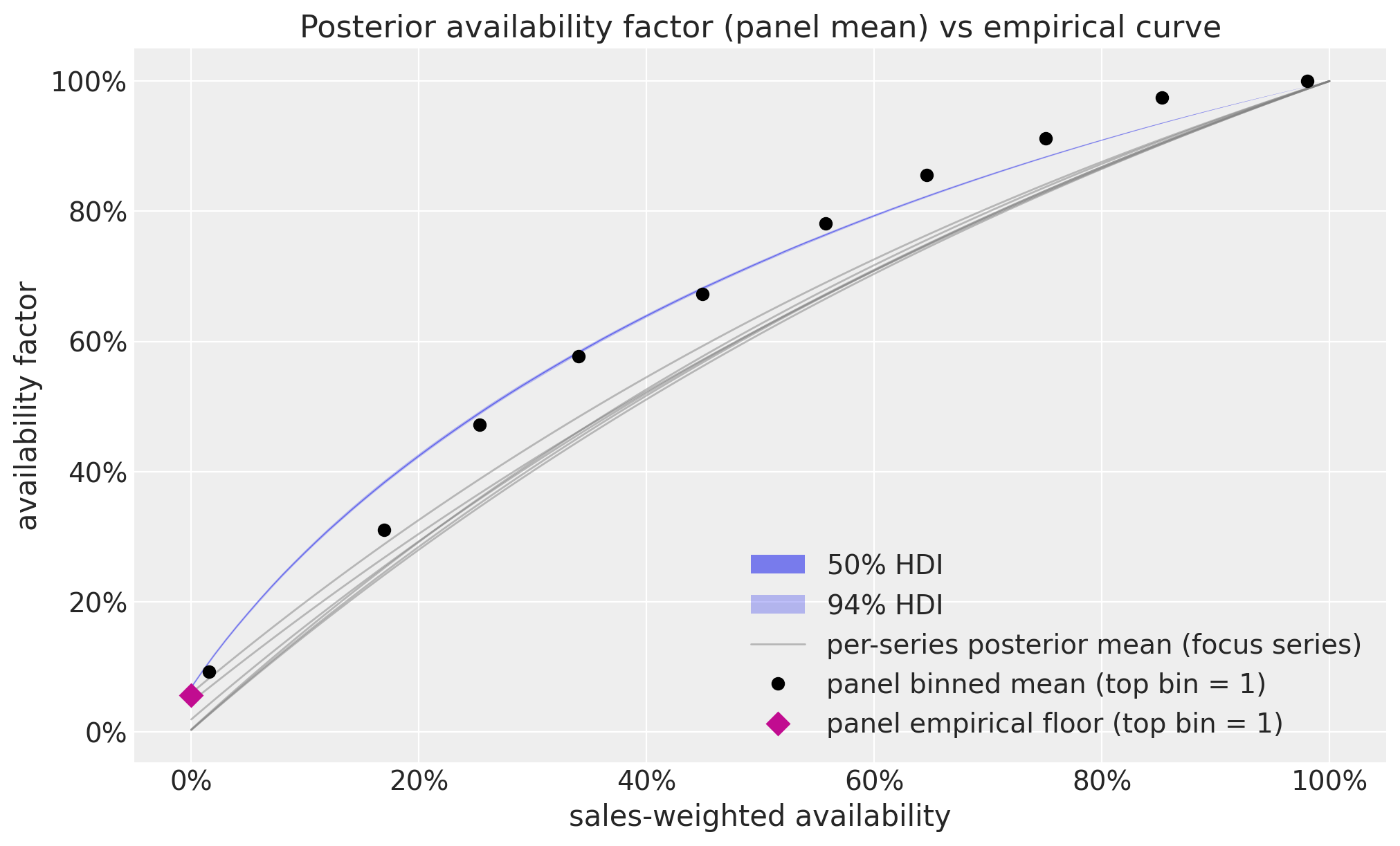
Forecast 1,000 daily store-product demand series from FreshRetailNet-50K with a damped-trend panel model, store-pooled promotion effects, a launch indicator, and a floored saturating availability factor that handles noisy stockout labels, fit with SVI and a custom optax optimizer, ending with a full-availability counterfactual forecast of uncensored demand for planning.
Hierarchical forecasting I
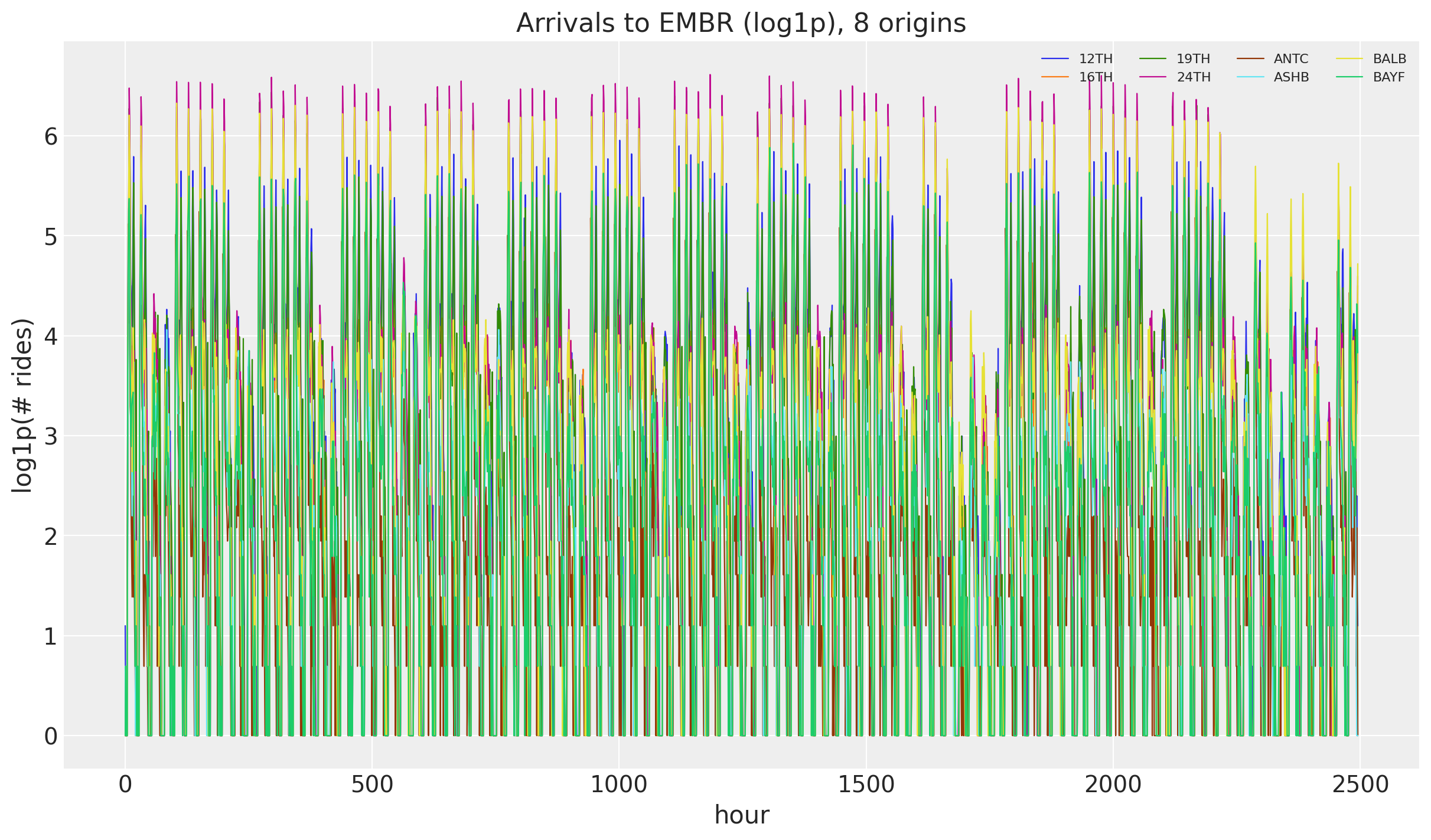
Forecast hourly BART arrivals across 50 origin stations to a fixed destination with a hierarchical model that pools information across series, fit with SVI.
Hierarchical forecasting II
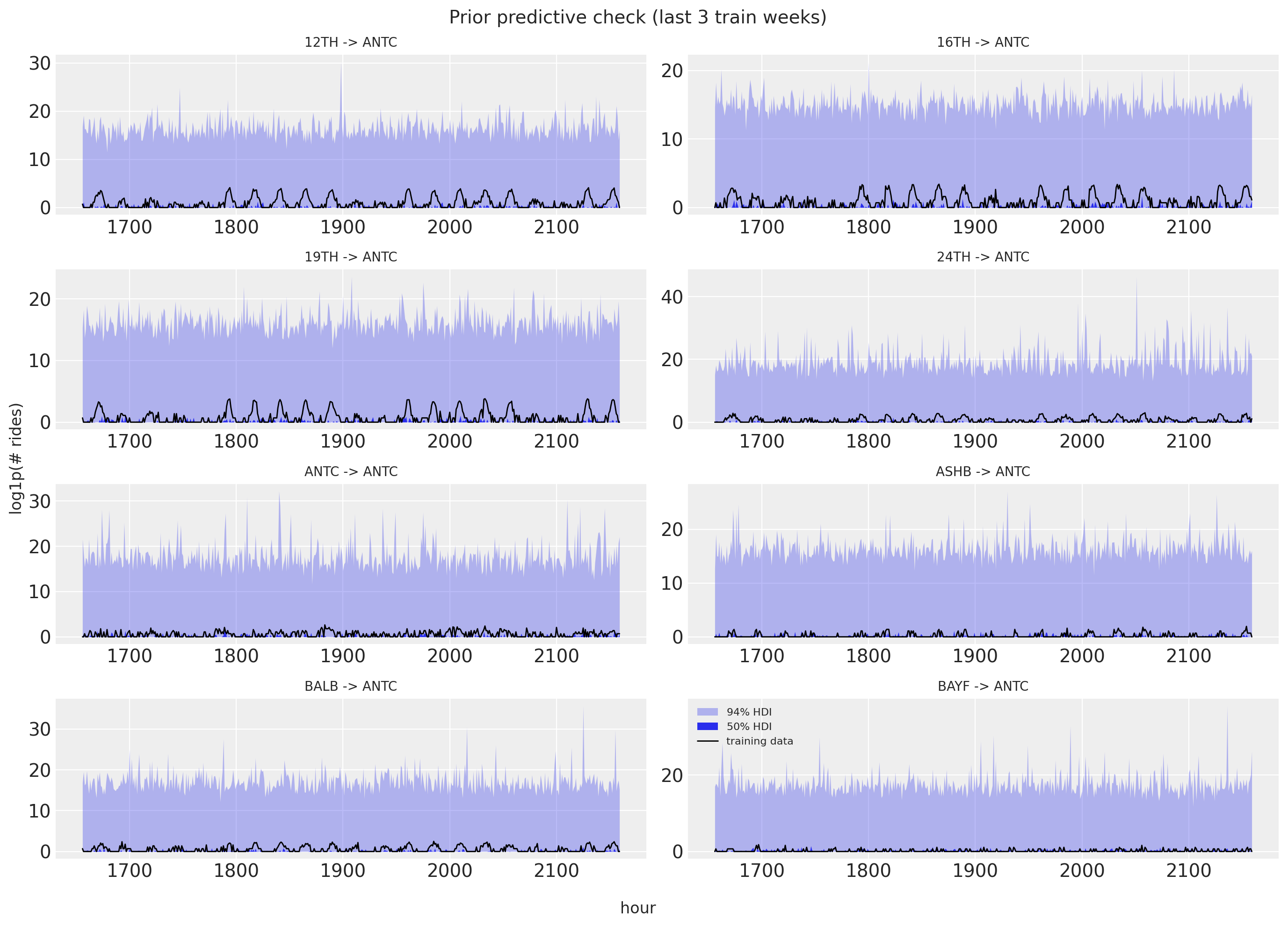
Scale the hierarchical model to the full 50 by 50 origin-destination panel of hourly BART ridership, forecasting all 2,500 series jointly with SVI.
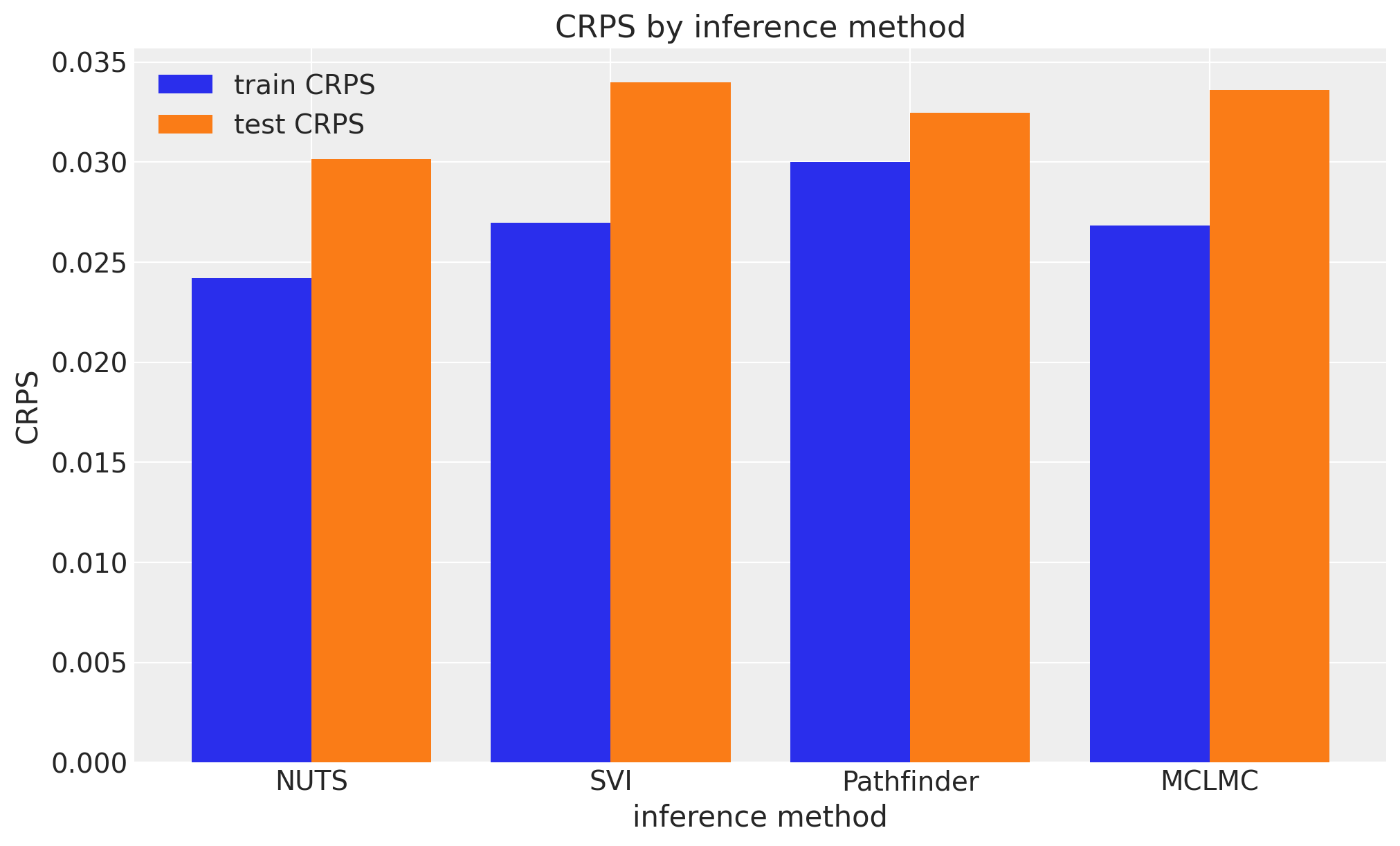
Comparing inference methods: NUTS, SVI, Pathfinder, and MCLMC
Fit the same weekly BART ridership model with NUTS, SVI, Pathfinder, and MCLMC without touching the model code, and compare their forecasts with CRPS.
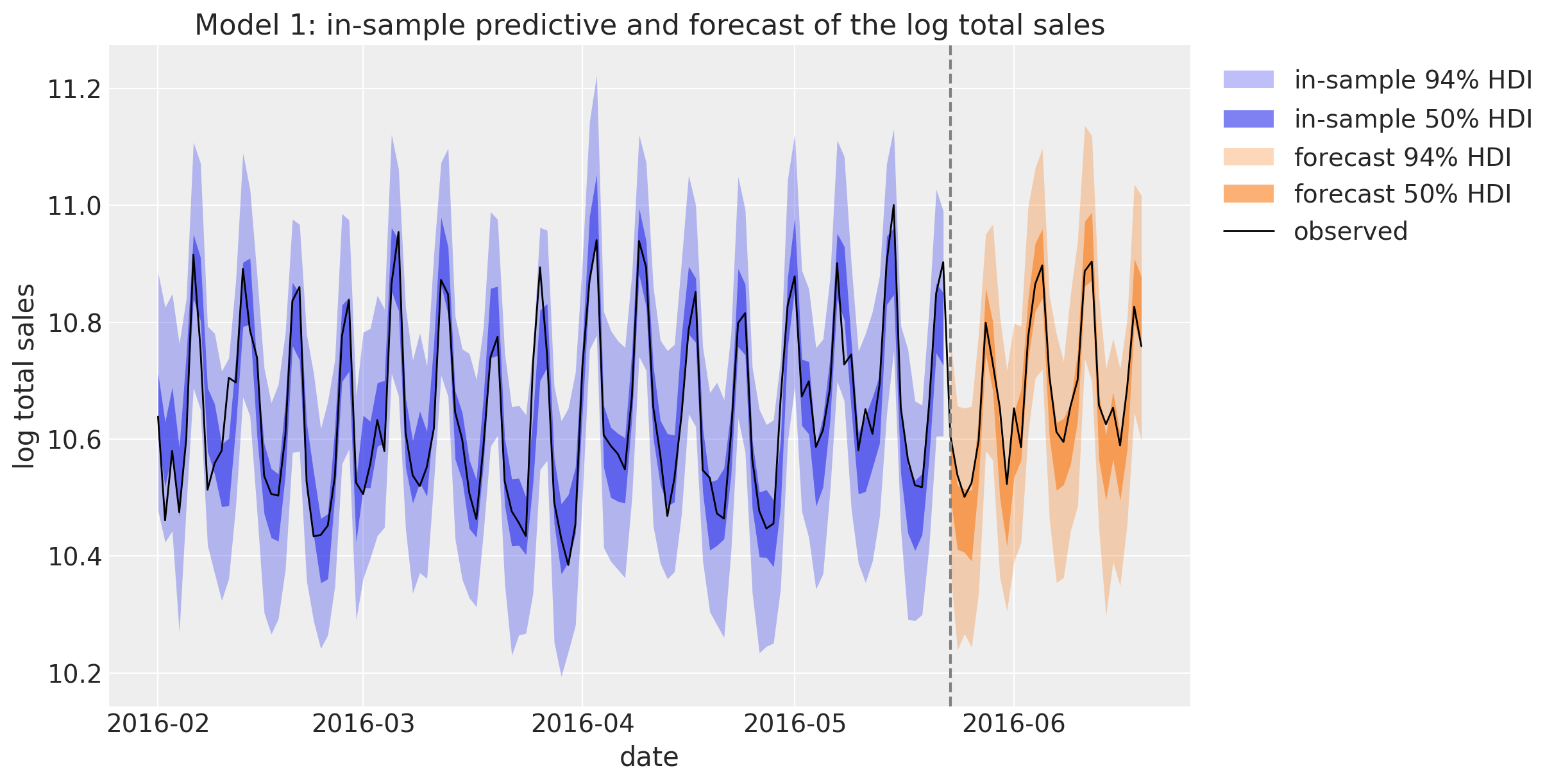
M5 forecasting: top-down, bottom-up and middle-out
Port the three models of the Pyro M5 starter kit (top-down, bottom-up and middle-out) to the full M5 Walmart data, fit them with SVI, backtest them at the twelve hierarchy levels with a weighted scaled CRPS and compare their fitting times.
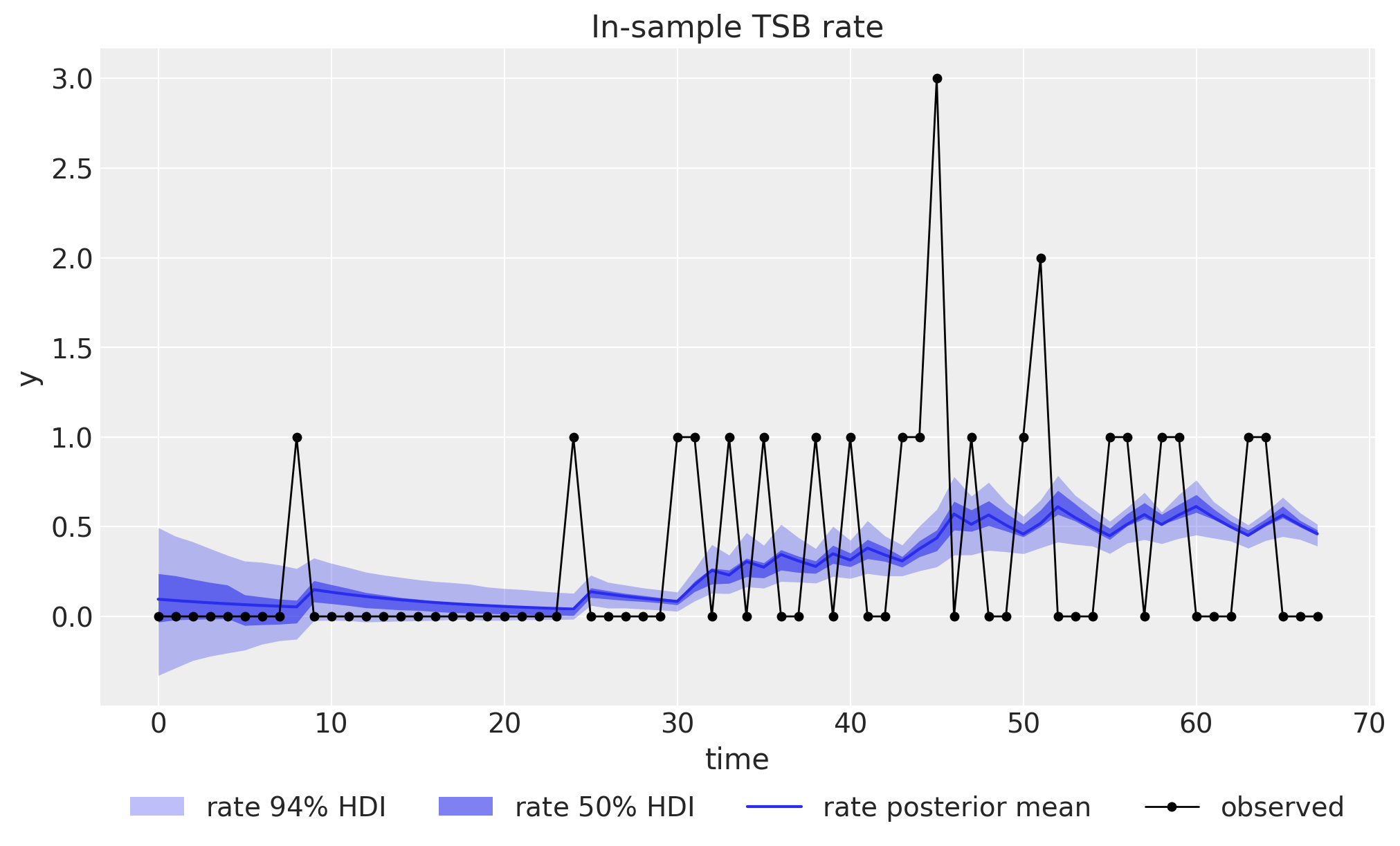
TSB Method for Intermittent Demand
Bayesian TSB method for intermittent demand: masked exponential smoothing of demand sizes and a per-period demand probability, so the forecast decays during zero-runs where Croston’s stays frozen. NUTS inference and one-step-ahead cross-validation.

Vector Autoregression (VAR)
Fit a Bayesian VAR(2) to US macroeconomic growth rates with NUTS, forecast 30 quarters ahead, compute impulse response functions, and compare a weakly informative prior with Minnesota shrinkage.